
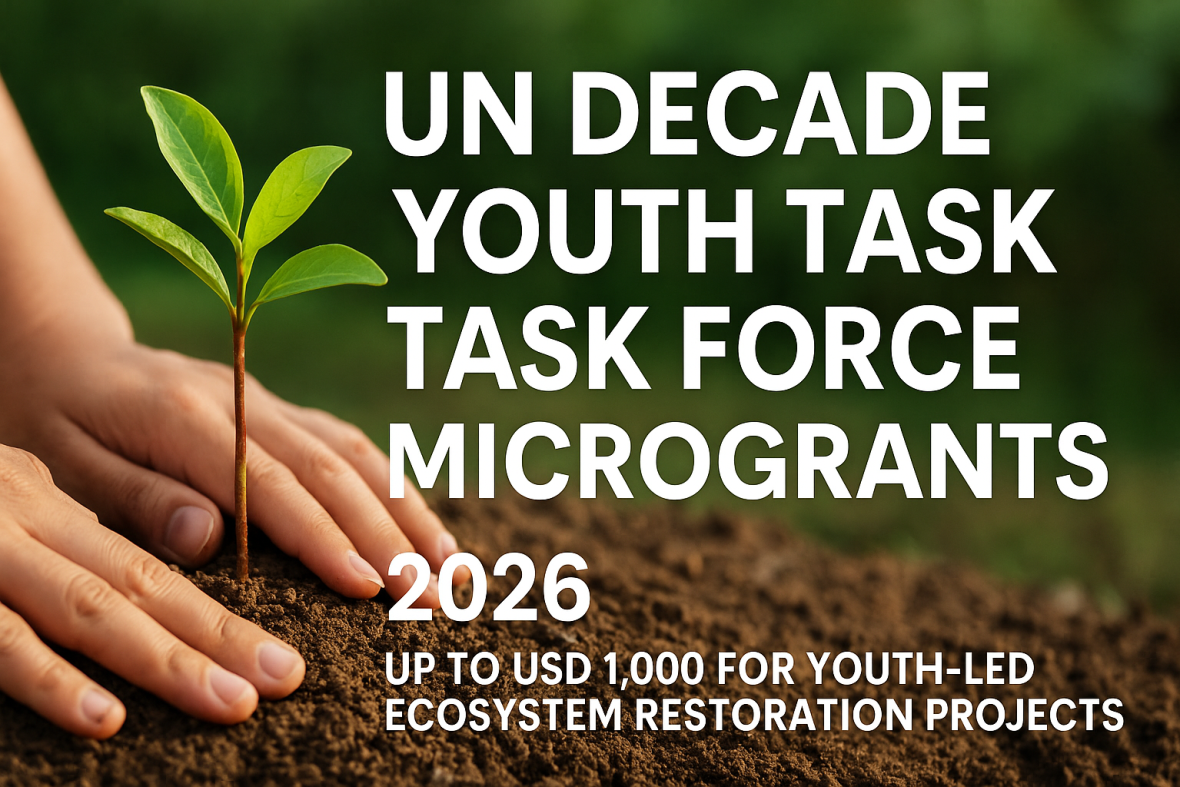
Across the world, young people are rising to lead powerful environmental movements, restore damaged landscapes, and champion nature-based solutions in their communities. To support this growing momentum, the UN Decade on Ecosystem Restoration is offering a new round of Youth Task Force Microgrants for 2026 — a unique opportunity designed specifically for youth-led organisations working to heal the planet.
This grant provides up to USD 1,000 to support innovative, community-focused restoration projects. Whether you work on reforestation, freshwater protection, sustainable agriculture, coastal restoration, or urban greening, this microgrant can help you scale your impact and bring your ideas to life.
This comprehensive guide explains the purpose of the microgrant, who is eligible, what types of projects qualify, how to prepare a winning application, and how to apply before the deadline.
🌍 About the UN Decade Youth Task Force Microgrants
The microgrants are part of the global UN Decade on Ecosystem Restoration 2021–2030, a worldwide movement dedicated to preventing, halting, and reversing the degradation of ecosystems.
The Youth Task Force Microgrants specifically support:
- Youth-led organisations
- Community-based environmental projects
- Restoration actions with measurable ecological impact
- Initiatives aligned with global sustainability and climate goals
Only 10 organisations will receive funding — making strong, well-prepared applications crucial.
💰 Grant Amount and Funding Allocation
- Up to USD 1,000 per project
- 10 microgrants will be awarded in total
- 80% of grants will go to youth-led organisations in the Global South
- 20% of grants will go to organisations in the Global North
This structure ensures that resources reach communities most affected by climate change and ecological degradation.
🌱 What Types of Projects Are Eligible?
Projects must focus on ecosystem restoration and should clearly address one or more of the UN Decade’s priority ecosystem categories, such as:
✔ Forests and woodlands
✔ Farmlands and sustainable agriculture
✔ Freshwater ecosystems and wetlands
✔ Grasslands, savannahs, and shrublands
✔ Ocean and coastal ecosystems
✔ Peatlands
✔ Mountains and highlands
✔ Urban and peri-urban green spaces
Eligible projects typically include:
- Tree planting and forest recovery
- Soil restoration and regenerative agriculture
- Riverbank and wetland rehabilitation
- Mangrove restoration and coastal protection
- Community waste reduction and ecosystem clean-ups
- Youth-led biodiversity conservation initiatives
- Urban garden creation and green space revitalization
The most competitive proposals are those that show clear environmental benefits, strong community engagement, and measurable outcomes.
👥 Eligibility Requirements
To apply successfully, organisations must meet the following conditions:
✔ Must be a youth-led organisation
Leadership must be under 35 years old.
✔ Must be legally registered
Unregistered groups, individuals, or informal teams are not eligible.
✔ Must propose a project to be implemented between February and July 2026
✔ Must submit a complete application with all supporting documents
✔ Proposed project must directly focus on ecosystem restoration
Organisations from both the Global South and Global North may apply, but priority will be given to areas with high ecological vulnerability.
📅 Important Dates
- Applications Open: December 1, 2025
- Application Deadline: December 31, 2025 (11:59 PM UTC)
- Grant Decisions Announced: January 2026
- Project Implementation: February – July 2026
Late applications will not be accepted.
🧠 What Your Proposal Should Include
A strong proposal should present a clear, compelling, and achievable restoration plan. It must include:
1. Project Overview
- Name of organisation
- Project title
- Location
- Ecosystem type
- Brief summary of restoration goals
2. Problem Statement
Clearly explain:
- What environmental problem exists?
- Why is restoration needed?
- What communities or ecosystems are affected?
3. Proposed Solution
Describe:
- Restoration activities
- Tools and methods to be used
- How youth and community members will participate
4. Expected Outcomes
Show what will change as a result of your project, such as:
- Number of trees planted
- Amount of land restored
- Improvement in biodiversity
- Community benefits and education outcomes
5. Implementation Timeline (Feb–July 2026)
Provide a realistic month-by-month plan.
6. Budget Breakdown (Up to USD 1,000)
Budget may include:
- Seedlings and plant materials
- Field equipment
- Transportation
- Restoration tools
- Community outreach materials
Salaries, unrelated travel, and administrative costs are usually not funded.
7. Sustainability Plan
Explain how restoration work will:
- Continue after the grant
- Be maintained long-term
- Remain beneficial to the community
📊 Tips for a Successful Application
To increase your chances of winning one of the 10 grants:
✅ Be clear and concise
Avoid vague statements. Present specific problem–solution structures.
✅ Focus on measurable restoration outcomes
Numbers make proposals stronger (e.g., “Planting 500 native trees”).
✅ Demonstrate strong youth leadership
Funders want to see real youth involvement and decision-making.
✅ Show community participation
Explain how the project will involve local residents, schools, or volunteers.
✅ Provide a realistic budget
Ensure every cost directly relates to restoration.
✅ Highlight long-term impact
Sustainability makes proposals more attractive.
🌟 Why This Microgrant Matters
The UN Decade on Ecosystem Restoration recognises that young people are critical to reversing environmental damage. Through this microgrant, youth-led organisations can:
- Launch or expand restoration projects
- Strengthen their community impact
- Build organisational credibility
- Access new networks and opportunities
- Inspire more young people to take climate action
This funding is not just financial support — it is a global platform for youth voices and environmental innovation.
🧾 Conclusion
The UN Decade Youth Task Force Microgrants 2026 offer young environmental leaders the opportunity to drive meaningful restoration work in their communities. With up to USD 1,000 in funding and global recognition, this microgrant can help you turn your restoration ideas into real, measurable impact.
If your organisation is youth-led, legally registered, and committed to environmental restoration, this is a valuable opportunity worth pursuing. Gather your team, refine your proposal, and apply before the deadline.
🌐 Official Application Link (Only Link Required)
👉 Apply here:
https://www.decadeonrestoration.org/events/un-decade-youth-task-force-microgrant-call-applications