
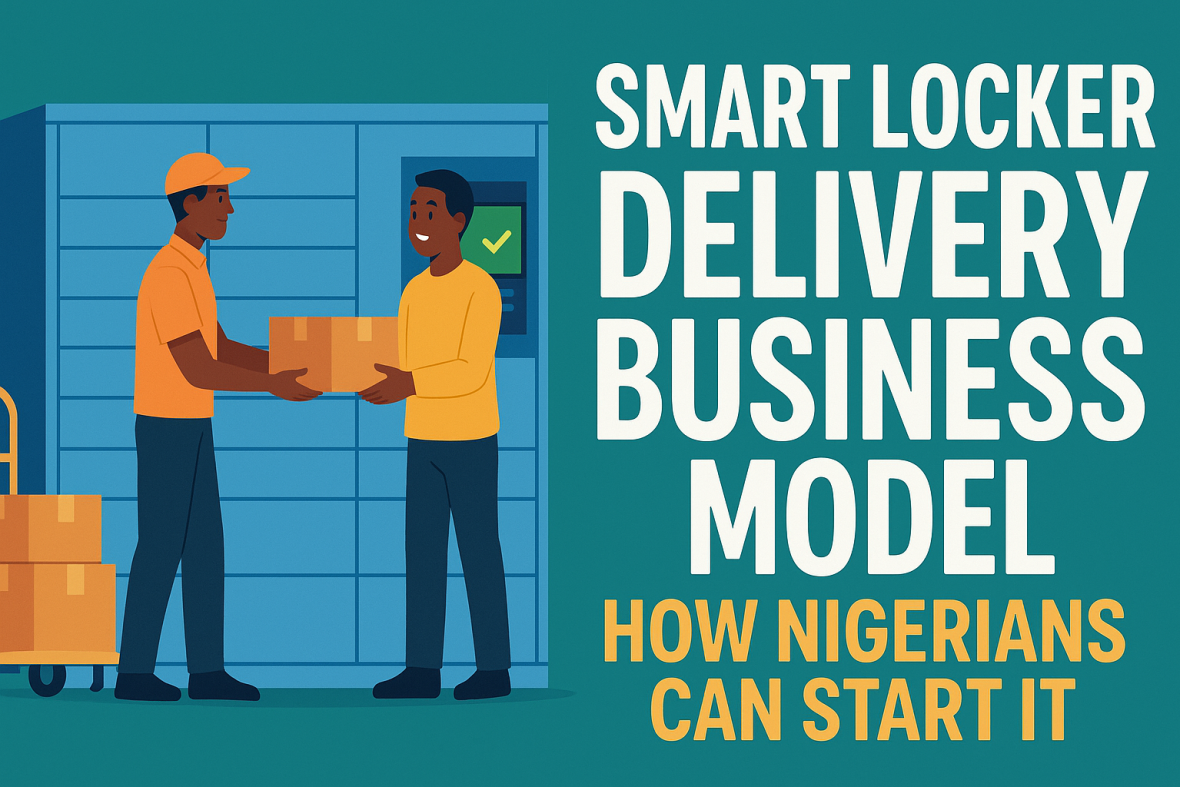
1. What Is a Smart Locker Delivery Business?
A smart locker is a secure electronic storage system where parcels are delivered and stored until the owner picks them up.
Think of it like:
- A central delivery box
- Divided into compartments
- Controlled with digital authentication
When logistics riders drop parcels inside, the customer receives:
- pickup code (OTP)
- QR scanner code
- app notification
Then they go to the locker, open their exact compartment, and pick up their order.
Why It Matters
Because it eliminates:
- failed deliveries
- time wasted locating customers
- theft
- rescheduling costs
And it creates a reliable last-mile option for ecommerce.
How It Works in Nigeria
With rising online purchases from:
- Jumia
- Konga
- Temu
- AliExpress
- Instagram stores
…there is a huge demand for reliable parcel hand-off points, especially in:
- estates
- universities
- busy plazas
- transport terminals
If you own and deploy lockers, you provide that infrastructure — and earn from it.
2. Why Smart Lockers Are About to Boom in Nigeria
1. Online Orders Are Exploding
Millions of parcels move daily.
Studies show ecommerce usage is rising yearly, especially in Lagos, Abuja, Port Harcourt, and Ibadan.
2. Security Problems
People are tired of stolen parcels and dishonest drop-offs.
3. Failed Delivery Rates
Riders waste time calling customers, waiting at gates, or rescheduling.
A smart locker solves all these.
4. Cheaper Last Mile
Delivery companies reduce transport costs when riders drop many parcels at ONE locker point.
5. Customers Prefer Convenience
Pick anytime — morning, night, weekends.
Here’s the truth…
Smart lockers are the future of Nigerian delivery infrastructure.
And if you start early, you position yourself like early POS fintech agents did years ago.
3. How the Smart Locker Delivery Business Model Works
Let’s break it down in simple terms.
Core Logic
- You install a smart locker in a strategic location.
- Logistics riders drop parcels there.
- Customers receive codes and pick up their items.
- You earn from:
- usage per parcel
- locker rental spaces
- advertising on lockers
- subscription plans
What Makes It Work
- Security technology
- Reliable power
- High-traffic location
- Partnerships with delivery firms
Smart lockers rely on:
- IoT
- RFID access
- Digital authentication
- Solar power or inverter backup
4. Revenue Streams for Smart Locker Owners in Nigeria
1. Pay-Per-Parcel Fee
Charge logistics companies:
₦200–₦500 per item delivered.
If 70 parcels drop daily:
= ₦14,000 – ₦35,000/day
Monthly:
₦420,000 – ₦1,050,000
2. Locker Compartment Rental
Businesses can book compartments monthly:
₦20,000 – ₦70,000 per unit.
3. Advertising Space
Use locker panels for ads:
- tech brands
- courier companies
- estate developers
- banks
₦150,000 – ₦450,000 per month depending on location.
4. Subscription Model
Customers pay small annual fee for quick pickup access.
₦3,000 – ₦6,000 per user yearly.
5. Return Handling Fee
₦300–₦700 per returned parcel.
5. Step-by-Step Guide to Starting in Nigeria
Step 1: Identify Demand Area
Look for:
- estates with 500+ apartments
- universities with 6,000+ students
- business districts
- malls with high foot traffic
High delivery frequency = profits.
Step 2: Get the Locker Structure
Options:
- import a ready-made smart locker
- fabricate locally using metal works
- outsource to a tech company offering white-label lockers
Smart delivery lockers include:
- multiple cells
- central control panel
- solar / inverter
- smart lock pins
- software dashboard
Step 3: Install Power & Security
Ensure:
- solar panel or inverter
- CCTV
- 24/7 site accessibility
Step 4: Software Setup
You’ll need:
- cloud dashboard
- OTP generation
- SMS notification
- locker user app (web or mobile)
Some tech firms license their software for use.
Step 5: Partner with Logistics Firms
Examples:
- GIG Logistics
- DHL Express
- Kwik Delivery
- Speedaf
- Local dispatch riders
Offer discounted drop-off fee to attract bulk volume.
Step 6: Create Pricing System
Suggested:
- ₦200–₦500 per parcel
- ₦20,000–₦70,000 compartment lease
Charge estates monthly rent if installed inside their property.
Step 7: Deploy More Locations
Once PROFITABLE:
expand to:
- more malls
- campus hostels
- bus parks
- office complexes
Scale smartly.
6. Legal and Regulatory Notes in Nigeria
Smart lockers are legal to operate in Nigeria.
However, take note:
- If installed in private property, execute a rental agreement.
- For large multi-city networks, register a company with CAC.
- Follow data security policies (OTP access should be encrypted).
7. Best Locations for Smart Locker Deployment
High-convert zones:
- Lekki phase 1 estates
- Abuja estates
- LASU, UNILAG, UNIPORT, UI, UNIBEN campuses
- Shopping plazas
- Modern office buildings
- Airports
- Train/bus terminals
Delivery points need constant parcel traffic.
8. Real-Life Use Cases in Nigeria
➤ University Smart Lockers
Students order:
- phones
- gadgets
- clothes
- textbooks
Instead of calling students, riders drop all items at one locker.
➤ Residential Estates
Busy working-class residents pick up after work.
➤ Ecommerce Dispatch Hubs
Instagram vendors use lockers as a mini warehouse.
➤ SME Storage Booth
Small businesses store items for multiple pickup customers.
9. Case Study Scenario
Aisha, from Abuja, deploys a 48-cell smart locker in a large gated estate.
Locker Costs:
- build/fabricate: ₦2.5m
- solar & inverter: ₦600k
- software license: ₦350k/year
Partners with:
- 20 dispatch riders
- Courier brand using locker daily
Daily volume: 55 parcels
Fee per item: ₦300
= ₦16,500/day
Monthly: ₦495,000
Advertising deal: ₦200,000/mo
Compartment lease: ₦100,000/mo
Total Monthly Revenue: ≈ ₦795,000
Operating costs:
- Maintenance & cleaner: ₦70,000
- SMS notifications: ₦40,000
- Security: ₦20,000
Net Profit: ≈ ₦665,000/month
Locker pays itself off in 6–8 months.
10. Startup Cost & Profit Potential (Nigerian Estimates)
Estimated Costs
| Item | Estimated Cost (₦) |
|---|---|
| Locker Fabrication (local) or import | ₦1.8m – ₦4.5m |
| Solar Panel/Inverter Setup | ₦400k – ₦1m |
| Software License (annual) | ₦250k – ₦600k |
| Installation & Transport | ₦50k – ₦150k |
| CCTV & Lighting | ₦150k – ₦350k |
| Branding Wrapper | ₦70k – ₦200k |
| Startup Marketing | ₦50k – ₦150k |
Total: ₦2.7m – ₦6.9m
Profit Potential
| Locker Size | Daily Parcels | Fee/Parcel | Monthly Income |
|---|---|---|---|
| 24 Cells | 25–45 | ₦250–₦500 | ₦187,500–₦675,000 |
| 48 Cells | 40–70 | ₦250–₦500 | ₦300,000–₦1,050,000 |
| 96 Cells | 70–120 | ₦250–₦500 | ₦525,000–₦1,800,000 |
Locker pays back 5–12 months depending on traffic.
11. Common Mistakes & How to Avoid Them
❌ Installing lockers where delivery frequency is low
✔️ Validate demand first
❌ No solar backup
✔️ Ensure uninterrupted power
❌ No delivery partners
✔️ Sign MoUs with logistics companies
❌ Poor software security
✔️ Use encrypted OTP systems
❌ Wrong pricing
✔️ Keep parcel fee small but scalable
12. Tools & Platforms That Help
Software Systems
- Smart locker backend systems
- RFID access management apps
- Cloud locker dashboards
Hardware Support
- Local metal fabricators
- Solar providers
- CCTV installers
External Authority Links
(Useful for logistics, ecommerce, and policy research)
- Nigerian Communications Commission (NCC)
- Federal Ministry of Trade & Investment
- African ecommerce statistics on Statista
- NIPOST logistics guidelines
13. Nigerian Action Checklist (Step-by-Step)
✔ Conduct location feasibility study
✔ Draft pricing model
✔ Fabricate or import lockers
✔ Install power & security
✔ Deploy software & OTP access
✔ Partner with riders & courier firms
✔ Launch social media campaigns
✔ Track monthly parcel volume
✔ Expand to more sites
14. FAQs (Nigeria Based)
1. Is smart locker delivery business profitable in Nigeria?
Yes. With just 50+ parcels daily, revenue can hit ₦350k monthly.
2. Do I need a special license?
No. Just business registration and safety compliance.
3. Can smart lockers run without constant electricity?
Yes — solar and inverter systems work well.
4. Who are my main customers?
Delivery riders, ecommerce sellers, estates, and universities.
5. Can I start small?
Yes. Begin with a smaller unit (24 cells) and scale up.
6. Do I need tech skills?
No. Many firms sell ready-built locker software.
7. Can I place lockers outdoors?
Yes — but ensure weather-proof casing.
8. How fast can I break even?
5–12 months typically.
Conclusion
Smart lockers are not theory. They are already used globally to simplify parcel hand-off and cut logistics headaches. And Nigeria is ripe for adoption.
If you position yourself early, just like early POS pioneers did, you can own strategic points in estates, malls, and campuses — and build a strong monthly cash-flow asset.
From parcel fees, compartment rental, ads, and partnerships, the smart locker delivery business model in Nigeria is a powerful tech-logistics opportunity.
Start small, validate demand, deploy lockers, secure partners, and scale gradually.
The future of delivery is automated.
And those who install the infrastructure will earn from it.
Start now.